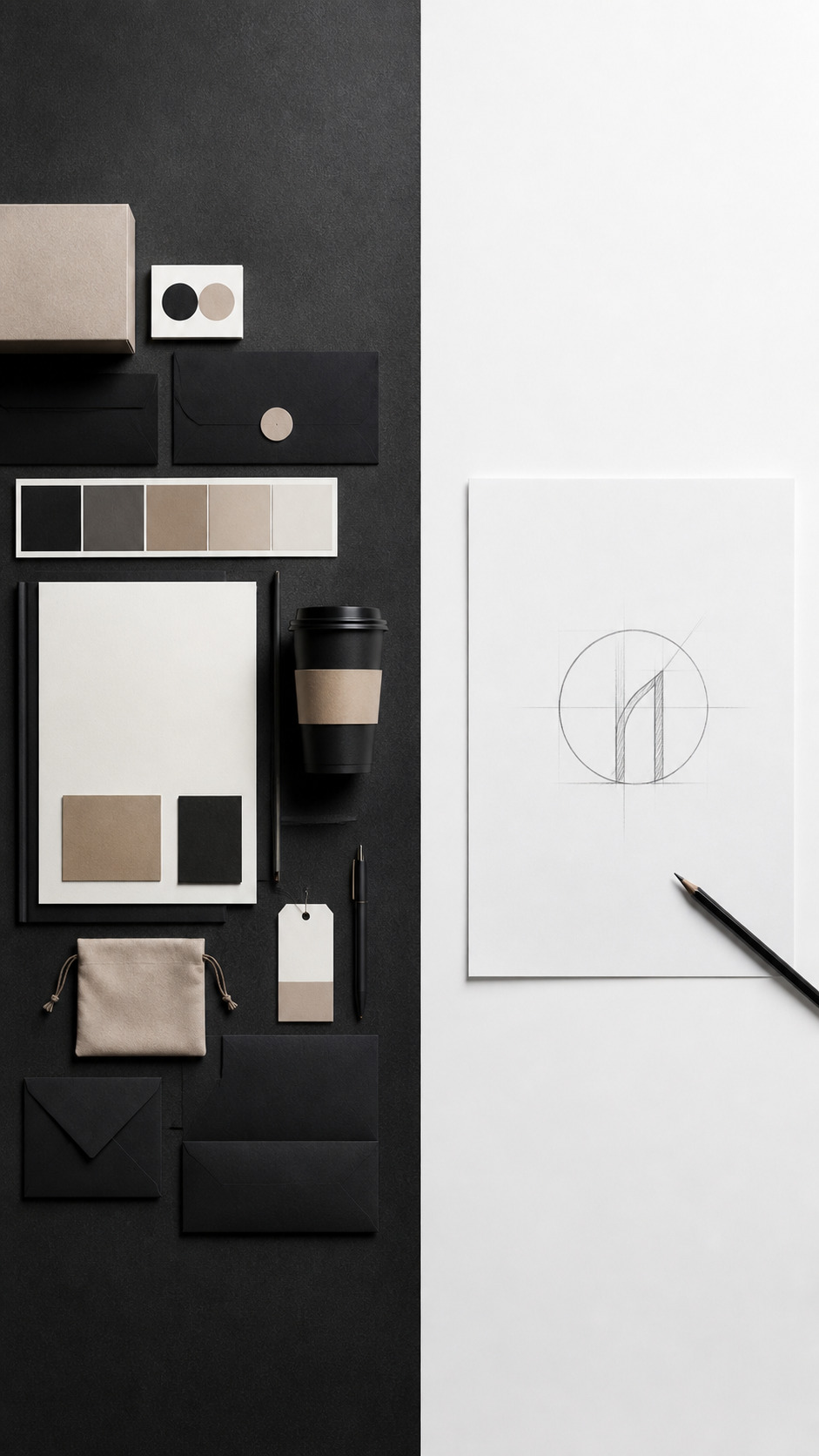
Brand Identity vs. Logo Design: Why the Difference Matters
A logo is one piece of brand identity, and not the most important one. Here's why confusing the two costs businesses recognition, trust, and pricing power.
"We need a logo" is one of the most common requests a brand identity design agency hears. It's also one of the most misleading, because what most companies actually need isn't a logo. It's a brand identity. The difference matters more than most founders realize.
The simple distinction
A logo is a single visual mark, typically a wordmark, monogram, or pictorial symbol, that identifies a brand. It's a fingerprint.
A brand identity is the complete system of visual, verbal, and experiential elements that express what a brand stands for. The logo is one component. So is the typography. So is the color system. So is the voice, the imagery direction, the motion language, the photography style, and the way the brand shows up across every touchpoint.
Asking for "a logo" is like asking for "an outfit" and being handed only a tie. The tie matters, but on its own it doesn't make you presentable.
Why logos alone don't work
Imagine a coffee shop with a beautiful logo, but a Comic Sans menu, mismatched chair colors, and inconsistent signage. The logo doesn't save the experience. Customers register the inconsistency unconsciously and conclude, usually correctly, that the business doesn't pay attention to detail.
The same is true for digital businesses. A startup with a polished logo but a generic-template website, off-brand social posts, and inconsistent product UI feels amateurish, even if the logo itself is great.
Brand recognition compounds across touchpoints. When the typography, color, voice, and visual rhythm align across every customer interaction, the brand becomes instantly recognizable. When they don't, the brand stays anonymous, even if you spent $10K on the logo.
What a real brand identity includes
- Logo system. Primary mark, secondary marks, monogram, responsive variants for different sizes and contexts.
- Typography. Primary and secondary typefaces with defined hierarchy, display, headlines, subheads, body, captions.
- Color system. Primary palette, secondary palette, neutrals, semantic colors (success, warning, error), with usage rules and accessibility-tested combinations.
- Iconography. Custom or curated icon style with consistent stroke weight, corner radius, and proportions.
- Imagery direction. Photography style, illustration language, video aesthetic, what does the brand look like in motion?
- Voice and tone. How the brand speaks, what it sounds like, what words it uses and avoids.
- Motion principles. How elements move, transition, and animate, including timing, easing, and choreography.
- Layout systems. Grid, spacing, composition rules that ensure consistency across applications.
- Brand guidelines. Documentation that codifies all of the above so future designers, developers, and partners can apply the brand consistently.
The business case for full identity systems
Brand identity isn't aesthetic indulgence. It drives measurable business outcomes:
- Pricing power. Brands with strong identity systems command higher prices. Customers pay more for products that feel premium and considered.
- Customer recognition. Multi-touchpoint consistency reduces the cognitive load on customers, making your brand easier to remember and recommend.
- Trust at scale. Visual consistency signals organizational maturity. Investors, partners, and enterprise customers read inconsistency as risk.
- Marketing efficiency. When the brand system is clear, every campaign, ad, and post takes less time to produce, because the rules are pre-decided.
- Hiring leverage. Strong brands attract better talent. Designers, engineers, and operators want to work for companies that look serious.
When a logo alone is enough (rarely)
If you're a freelancer who needs a personal mark for invoices, a logo alone might suffice. If your business is product-led and the product itself defines the experience (think: open-source tools used primarily through CLIs), light branding can work.
Most other businesses need an identity system. The minute you have a website, marketing channels, social accounts, customer-facing communications, and a team, you have a brand whether you designed it or not. The only question is whether it's coherent or accidental.
The cost difference
Logo-only projects from reputable studios typically run $3,000-$15,000. Full brand identity systems run $15,000-$60,000 for emerging companies and $60,000-$250,000+ for established businesses with rebrand needs.
The cost difference reflects scope. A logo project is one deliverable; an identity project is dozens, plus strategy, plus documentation, plus rollout support.
How to know what you need
Three questions:
- How many touchpoints does your brand have? Website, app, social, packaging, ads, sales materials, internal docs, count them. The more touchpoints, the more identity you need.
- How fast is your business growing? Companies expanding into new channels, regions, or product lines need systems that scale. A logo doesn't scale.
- What's your category? Premium, B2B, regulated, or trust-dependent industries (healthcare, finance, enterprise software) benefit disproportionately from polished identity systems.
The takeaway
If you're investing in your brand for the first time, invest in the system, not just the mark. A great logo without a brand identity is a great cover for a book no one finishes. A great brand identity, with a competent logo, is what builds recognition that compounds for decades.
If you're evaluating brand identity work for your company, we can help, or at least help you scope what you actually need.